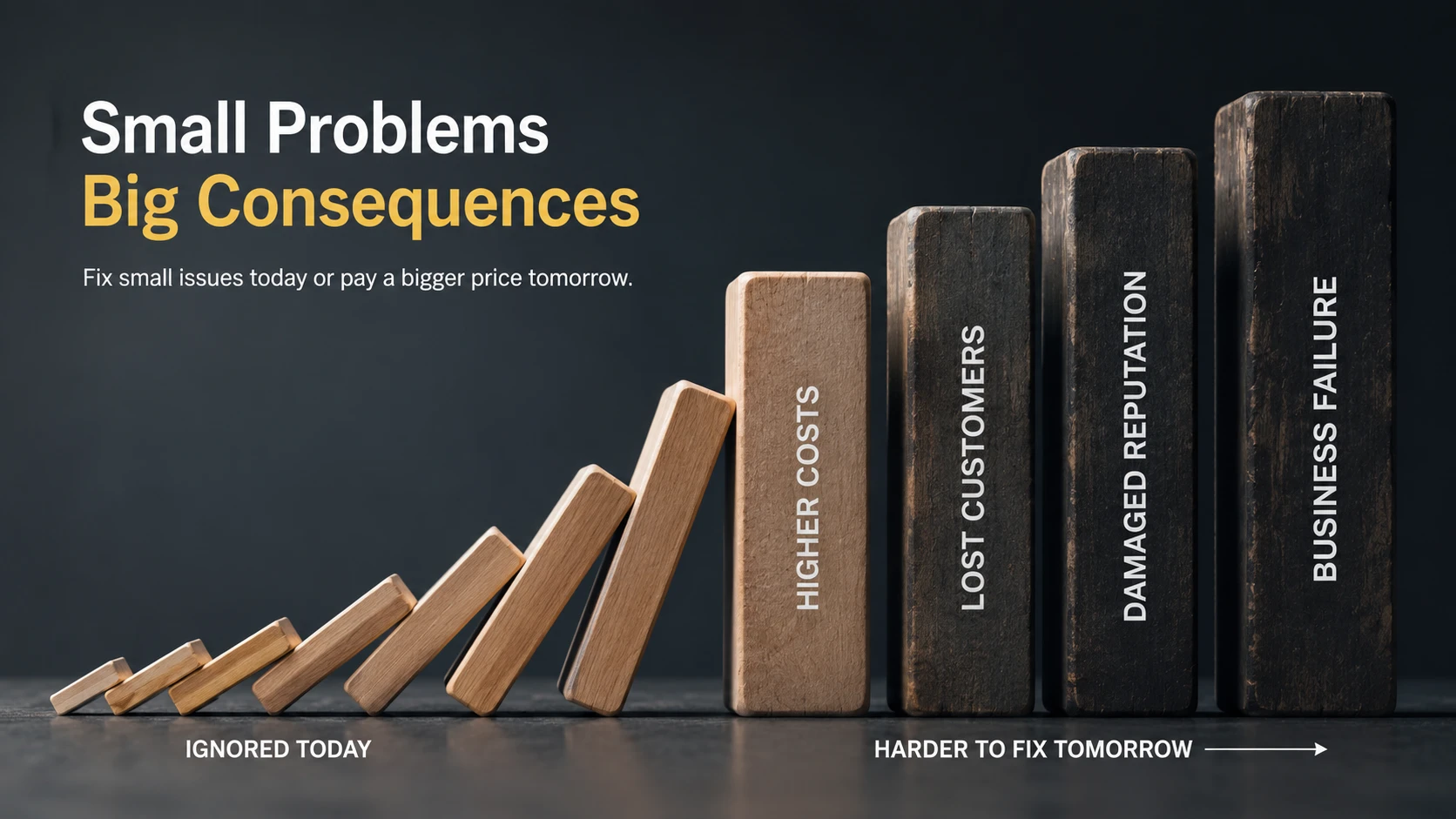

Businesses rarely fail because of one dramatic event. More often, they fail because they were unprepared for an event they never expected.
A key employee resigns.
A major customer leaves.
A supplier suddenly shuts down.
A cyberattack locks critical systems.
A new competitor changes the market.
An economic slowdown reduces demand.
None of these situations are unusual. Every business will face unexpected problems at some point. The difference is that some businesses recover quickly while others struggle to survive.
The question isn’t whether problems will happen. The question is whether your business is built to withstand them.
This article is part of our Business Fragility series. For the complete framework, read Hidden Business Risks: Why Most Businesses Are One Weak Link Away From Failure
Strong Businesses Prepare Before Problems Appear
Many business owners spend years improving sales, marketing, and operations. These are all important, but resilience often receives far less attention.
Resilience is the ability of a business to continue operating despite disruptions. It is built through preparation, not reaction.
A resilient business doesn’t rely on luck. It relies on systems, planning, and deliberate design.
Just as engineers design bridges to withstand stronger loads than they normally experience, business owners should build organizations that can handle more stress than everyday operations demand.
Why Businesses Become Vulnerable
Growth often hides weaknesses.
As revenue increases, business owners become more confident. Processes evolve naturally, shortcuts become permanent, and dependencies quietly increase.
Over time, many businesses become heavily dependent on:
- One large customer
- One supplier
- One salesperson
- One technical expert
- One software platform
- The owner’s daily involvement
Everything appears to work—until one dependency fails.
The problem isn’t the unexpected event itself. The real problem is concentrating too much risk in one place.

Principle 1: Reduce Single Points of Failure
Every business contains components that are more important than others.
Ask yourself:
- If one employee leaves tomorrow, what stops?
- If one supplier disappears, what happens?
- If one software platform fails, can we continue operating?
- If I take a month off, does the business keep running?
Whenever the answer is “everything stops,” you’ve identified a single point of failure.
The goal isn’t to eliminate every dependency. That’s impossible. The goal is to reduce the impact of any single failure.
Simple ways to do this include:
- Training multiple people for critical tasks.
- Maintaining relationships with backup suppliers.
- Keeping secure backups of business data.
- Cross-training employees.
- Diversifying your customer base.
Redundancy may seem inefficient during normal times, but it becomes invaluable when something goes wrong.
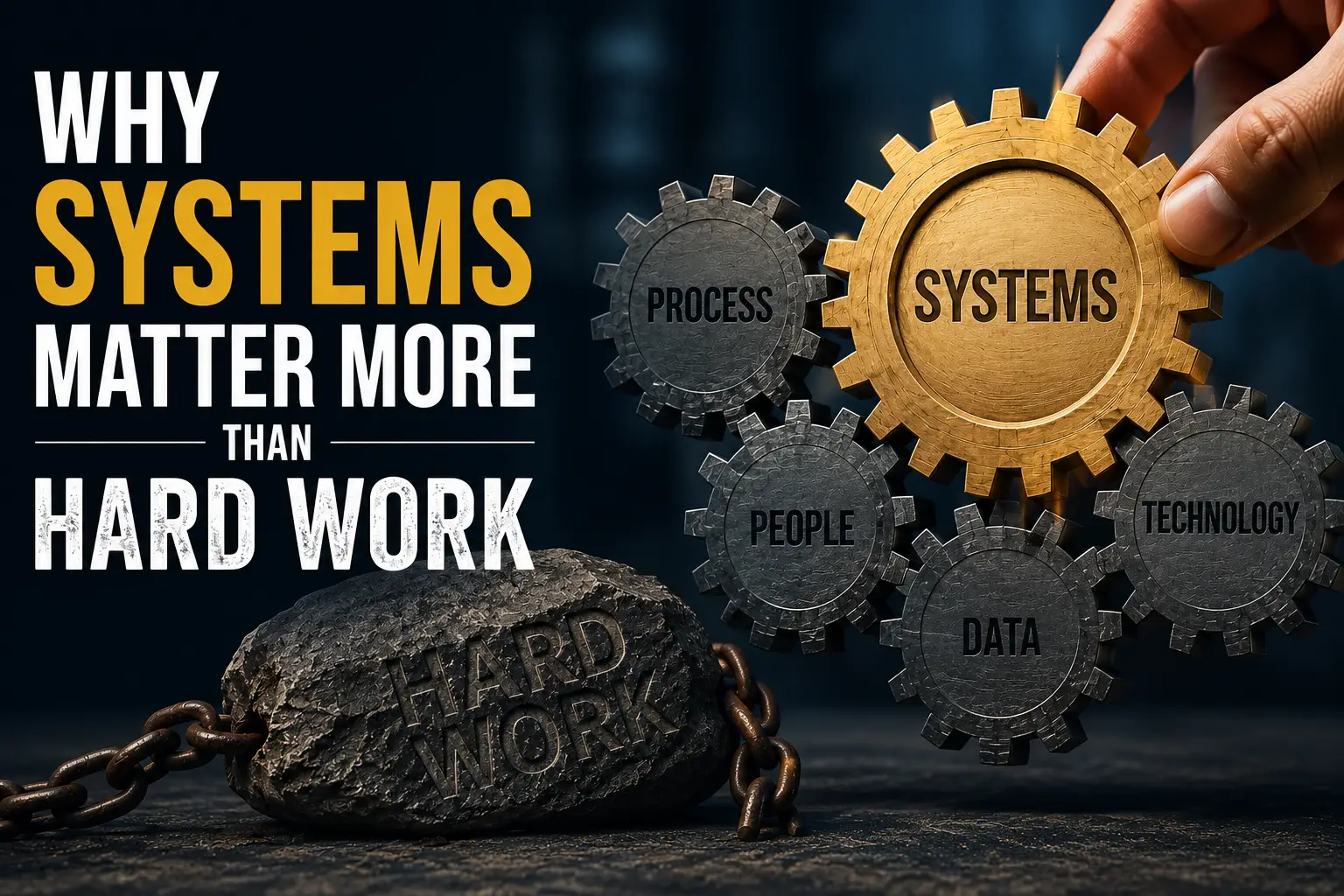
Principle 2: Build Systems Instead of Depending on People
Businesses often confuse talented people with reliable systems.
Talented people are valuable, but people change jobs, take leave, retire, and make mistakes.
Systems preserve knowledge.
Instead of relying on memory, document recurring processes such as:
- Sales
- Customer onboarding
- Project delivery
- Procurement
- Billing
- Customer support
When work is documented, new team members can become productive faster, errors decrease, and the business becomes less dependent on individuals.
Well-designed systems make businesses predictable.
Principle 3: Strengthen Financial Resilience
Many profitable businesses experience cash flow problems because they have no margin for unexpected events.
A delayed payment, a cancelled order, or an emergency expense can quickly create financial pressure.
Building financial resilience means preparing for temporary disruptions.
Consider:
- Maintaining emergency cash reserves.
- Avoiding excessive dependence on debt.
- Monitoring cash flow regularly.
- Diversifying revenue sources.
- Controlling fixed operating costs.
Financial flexibility gives business owners time to make better decisions under pressure instead of reacting out of panic.
Principle 4: Make Better Decisions Before They’re Needed
The quality of decisions often declines during crises.
Stress creates urgency. Urgency encourages shortcuts.
The best businesses reduce this pressure by thinking ahead.
Ask questions like:
- What if our largest customer leaves?
- What if sales fall by 30%?
- What if our office becomes inaccessible?
- What if a key system fails for two days?
These discussions help identify weaknesses before they become emergencies.
Planning doesn’t predict the future. It prepares you for multiple possible futures.
Principle 5: Review Risks Regularly
Business resilience isn’t a one-time project.
Every new employee, customer, supplier, product, or technology changes the risk profile of the business.
Set aside time every quarter to review questions such as:
- What are our biggest dependencies today?
- Which risks have increased?
- What new risks have emerged?
- Which systems need improvement?
- Are we becoming more resilient or more fragile?
Small improvements made consistently are often more valuable than major changes made only after a crisis.
A Practical Business Resilience Checklist
Use the following questions to assess your business:
- Can operations continue without the owner for two weeks?
- Are critical business processes documented?
- Do we have backup suppliers?
- Is business data securely backed up and tested?
- Is revenue diversified across multiple customers?
- Can multiple employees perform key responsibilities?
- Do we maintain emergency cash reserves?
- Are important business decisions documented?
- Do we review risks regularly?
Every “No” represents an opportunity to make your business stronger.
Resilience Is a Competitive Advantage
Many business owners view resilience as an insurance policy—something that only matters during difficult times.
In reality, resilience creates advantages every day.
Businesses with strong systems:
- Recover faster from setbacks.
- Earn greater customer trust.
- Scale more smoothly.
- Make better decisions.
- Attract stronger employees.
- Adapt more quickly to market changes.
Preparation reduces uncertainty, and lower uncertainty allows leaders to focus on growth instead of constant firefighting.
Final Thoughts
You cannot eliminate uncertainty from business.
Markets change. Customers change. Technology changes. Unexpected events will always occur.
But you can build a business that absorbs shocks instead of breaking under them.
Resilient businesses are not built by chance. They are built intentionally—through better systems, reduced dependencies, financial discipline, and continuous improvement.
The businesses that survive the longest are rarely those that avoid problems. They are the ones that are prepared to face them.