
Many businesses look successful from the outside.
- Sales are coming in.
- Employees are working.
- Customers seem happy.
Everything appears stable—until one unexpected problem exposes a weakness that has been quietly growing for years.
Sometimes it’s the loss of one key employee.
Sometimes it’s a cyberattack.
Sometimes it’s a supplier shutting down.
Sometimes it’s a cash-flow crunch.
Sometimes it’s a founder who can no longer run the business.
The surprising part is this:
The event itself usually isn’t what destroys the business.
It’s the hidden fragility that already existed.
This article is part of our Business Fragility series. For the complete framework, read Hidden Business Risks: Why Most Businesses Are One Weak Link Away From Failure
Every Business Has Weak Links
Imagine a heavy steel chain.
It can lift enormous weight.
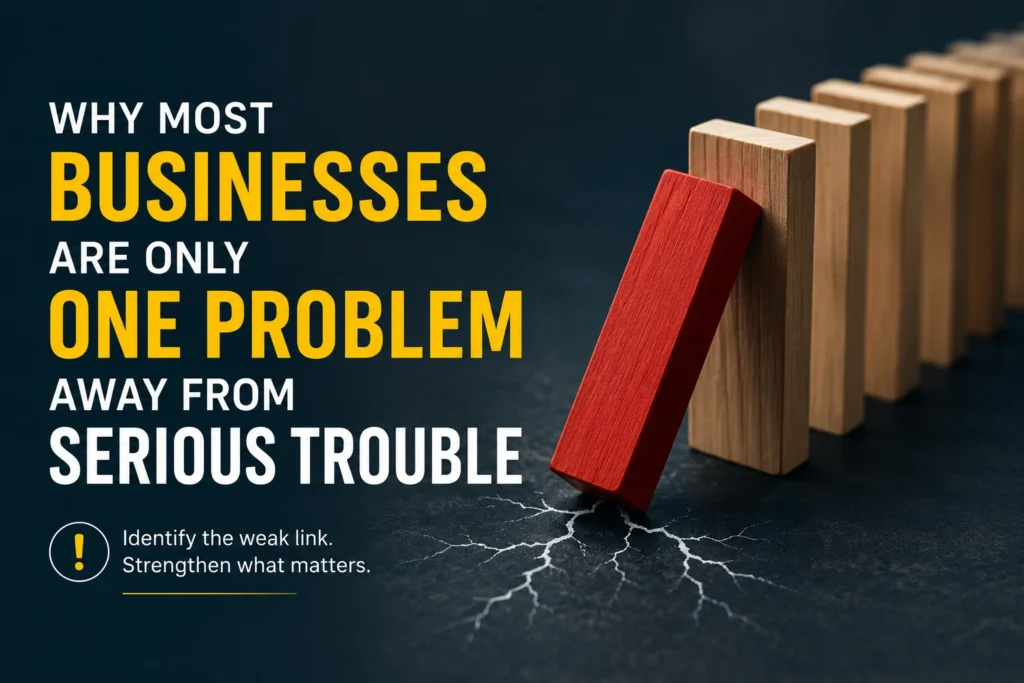
But the chain is only as strong as its weakest link.
Businesses work the same way.
You may have:
- Great products
- Loyal customers
- Strong sales
- Skilled employees
Yet a single weak system can put everything at risk.
Growth does not eliminate weaknesses.
In many cases, growth magnifies them.
Success Can Hide Fragility
One of the biggest mistakes business owners make is assuming that success equals resilience.
It doesn’t.
Many businesses survive because nothing has gone wrong yet.
That isn’t proof of strength.
It’s simply proof that they haven’t been tested.
Real business strength only becomes visible during disruption.
Common Hidden Weak Links
Every business has different vulnerabilities.
Some examples include:
Dependency on One Customer
If one client generates 50% of revenue, losing them can threaten the entire company.
Dependency on the Founder
If daily operations stop when the founder is unavailable, the business is fragile.
Dependency on One Employee
Critical knowledge that exists only in one person’s head creates significant operational risk.
Cash Flow
A profitable business can still fail if it runs out of cash.
Profit and survival are not the same thing.
Outdated Technology
Old software, weak security, or neglected websites can become major liabilities.
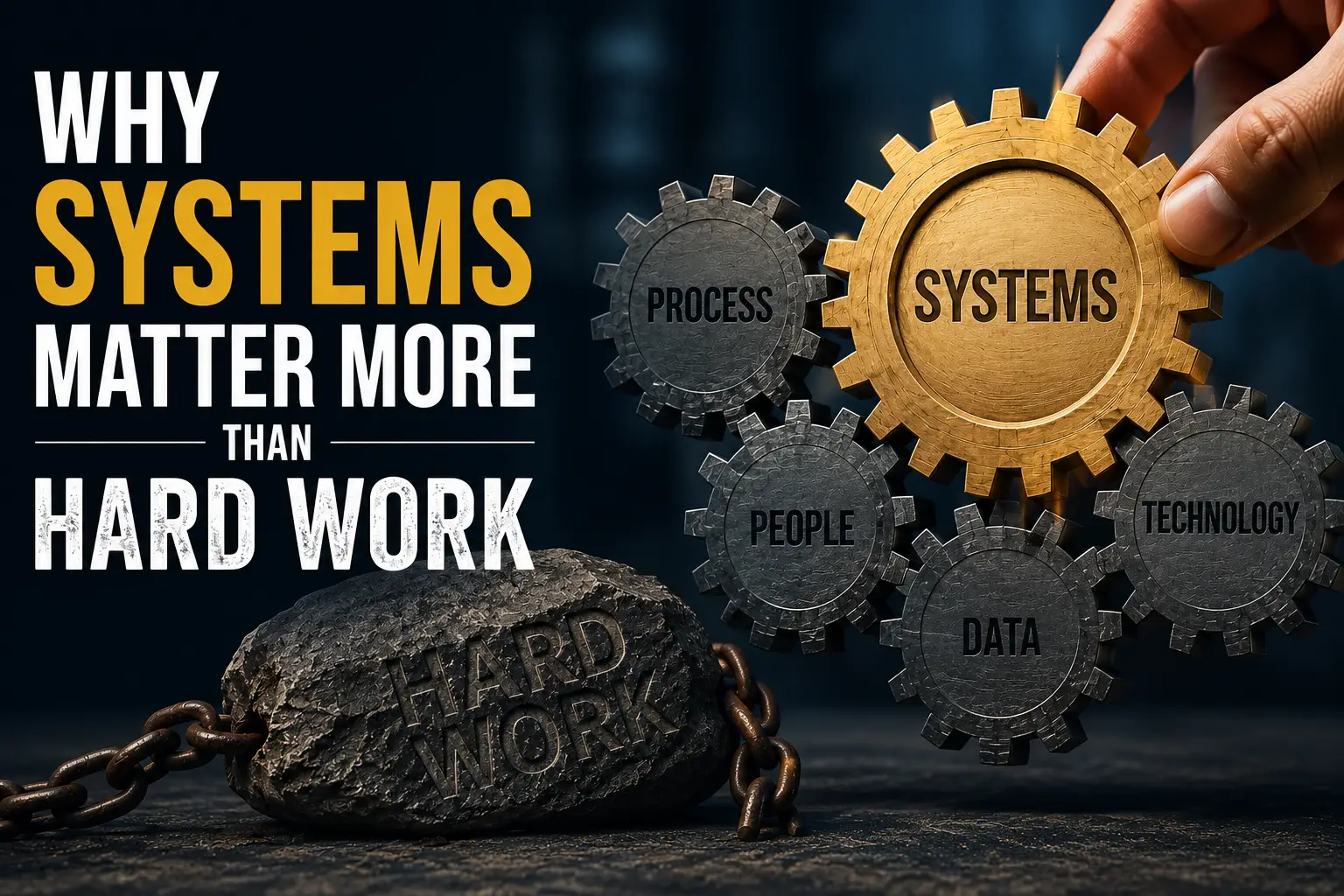
Lack of Systems
Businesses built around people instead of documented processes struggle to scale and recover from disruptions.
Why Small Problems Become Large Crises
Organizations that regularly identify and assess potential weaknesses are better prepared to prevent small issues from becoming major crises. Internationally recognized ISO 31000 risk management principles provide a structured framework for identifying, evaluating, and managing business risks.
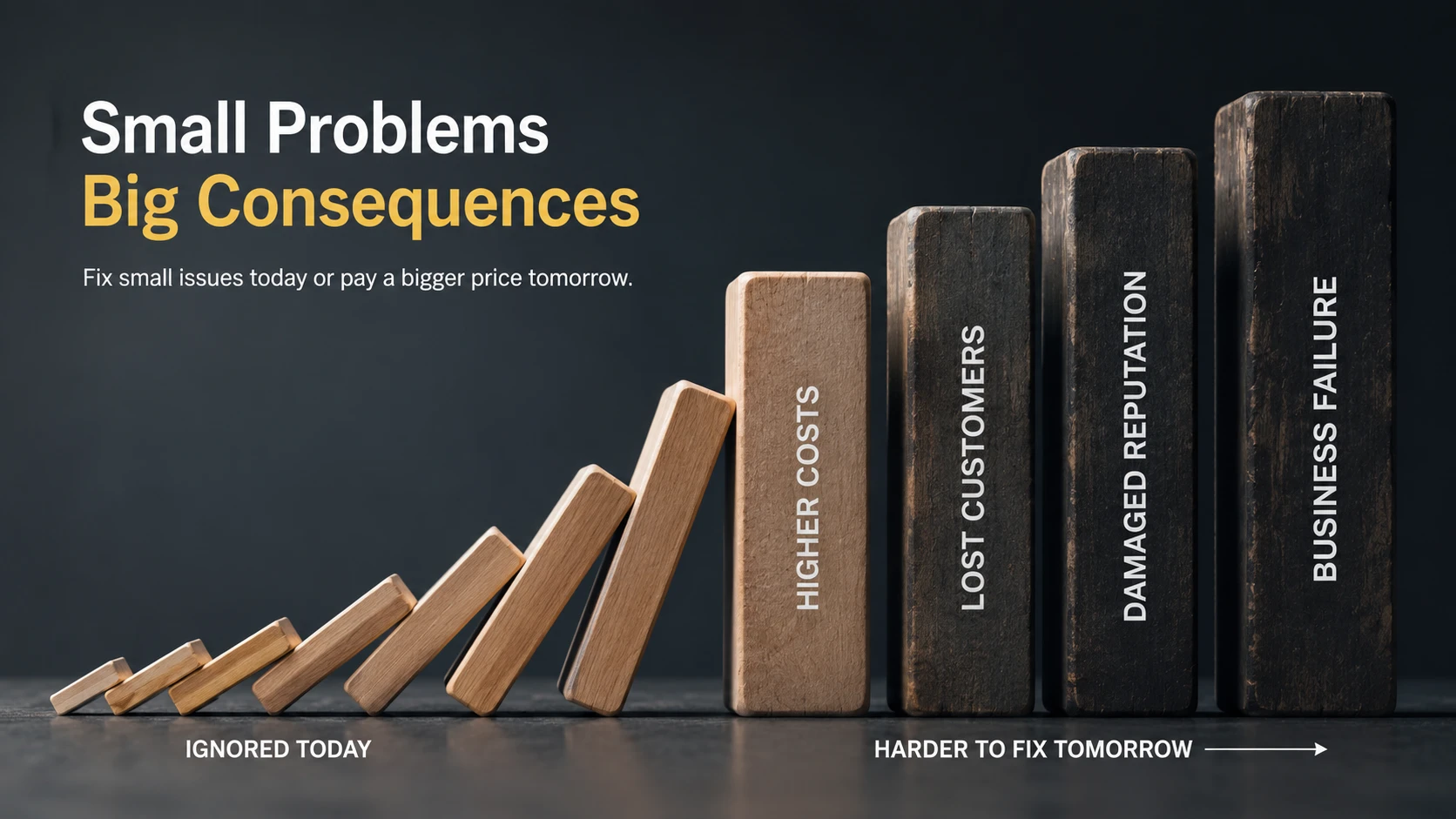
Business failures rarely happen because of one catastrophic event.
More often, several small weaknesses combine.
For example:
A key employee resigns.
↓
Projects get delayed.
↓
Customers become frustrated.
↓
Cash flow slows.
↓
Suppliers aren’t paid on time.
↓
The business enters survival mode.
Each issue alone is manageable.
Together, they create a crisis.
Ask Yourself These Questions
Instead of asking:
“How is my business performing?”
Ask:
- What could stop operations tomorrow?
- Where are we overly dependent?
- Which process would fail first under pressure?
- What assumptions are we making without evidence?
- Which risks have we ignored because nothing bad has happened yet?
These questions often reveal more than financial reports.
Strong Businesses Don’t Eliminate Risk
Risk can never be completely removed.
The objective is different.
Strong businesses reduce dependency.
They build systems.
They create backups.
They document processes.
They spread risk instead of concentrating it.
Resilience is built before it’s needed.
This idea closely aligns with the concept presented in Antifragile by Nassim Nicholas Taleb, which explains that resilient organizations become stronger by reducing fragility instead of trying to predict every possible disruption.
Final Thoughts
Every business has weak links.
Ignoring them doesn’t make them disappear.
In fact, success often hides them until it’s too late.
The businesses that survive over the long term aren’t necessarily the fastest growing or the most innovative.
They’re the ones that continually identify and strengthen their weakest links before those weaknesses become serious problems.
If your business depends heavily on a single person, customer, process, or system, it may be more vulnerable than it appears.
Start by identifying your weakest link.
Because sustainable growth begins with building a stronger business—not just a bigger one.